
Honda BR-V 2026 for Family Use: 7-Seat Layout, Everyday Comfort, and What to Check Before Buying
This is a quick look at the Honda BR-V 2026 from a family-use angle, with the focus on its three-row cabin, everyday comfort, and the practical things worth checking before buying.
Date: 2026-10-08Author: otochannel Editorial
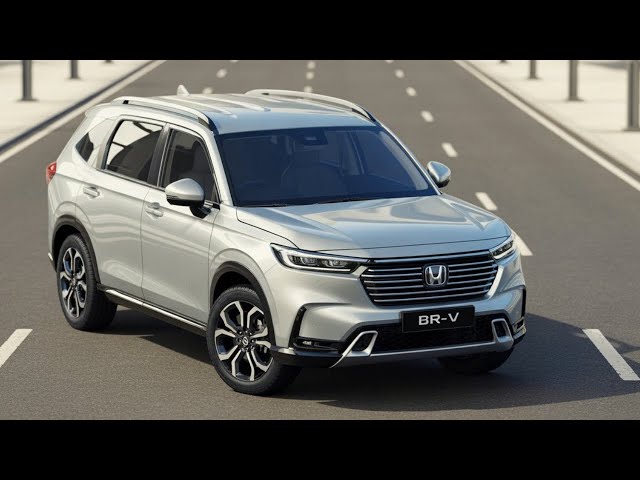
This is a quick look at the Honda BR-V 2026 from a family-use angle, with the focus on its three-row cabin, everyday comfort, and the practical things worth checking before buying.
Key takeaways
The Honda BR-V 2026 is still worth a look for buyers who want a practical 7-seat family car.
Its main appeal lies in the relatively high driving position, flexible cabin layout, and body size that still feels manageable in daily use.
For family buyers, what matters most is usually not just the feature list, but second-row comfort, real third-row usefulness, and ease of use in city traffic.
Why the BR-V is still worth considering in the family-car segment
In the family-car segment, not every buyer is looking for the flashiest model. Many people simply want a car that feels like a safer pick and stays easy to live with over time. From that point of view, the BR-V still has a place, because it brings together a modern look, a three-row cabin, and driving manners that most people can adapt to without much effort.
For daily use, that kind of combination often matters more than the numbers on paper. A family car usually is not dealing with only one job. It has to handle school runs, grocery trips, commuting, and weekend travel all at once. Because of that, whether a car is genuinely pleasant to use often depends on how it feels in everyday driving, not just on one or two numbers that look good in a brochure.
A flexible cabin layout is still one of its main selling points
The BR-V keeps showing up on family shortlists, and one important reason is its three-row seating layout. For small to medium-sized families, three rows do not always mean the car will be fully occupied every day, but they do add a lot more flexibility. When more passengers need to come along, the rear seats are there. When cargo space matters more, the cabin can be rearranged.
In terms of size, the BR-V is about 4,490 mm long and has a 2,700 mm wheelbase. That allows it to offer usable three-row space while keeping the outer dimensions fairly compact. The second and third rows can be folded down, and the third row uses a 50:50 split design, which makes it easier to adapt the cabin when larger items need to be carried.
So its value is not only about how many people it can seat, but also about layout flexibility. In real life, a car that can adjust to the rhythm of family use usually feels more useful than one that stands out in only one area but turns out to be less friendly in day-to-day use.
Seating position and visibility are more helpful in city use
Another important point is the relatively high driving position. In heavy traffic, neighborhood roads, or tight parking areas, that kind of visibility usually helps the driver feel more confident. For people who expect to drive this car often, that sense of ease behind the wheel is not a small thing.
The BR-V has around 207 mm to 220 mm of ground clearance. That height is not so tall that children or older passengers struggle to get in and out, but it is still enough to deal with typical uneven roads and taller speed bumps. With a turning radius of around 5.3 meters, it also feels easier to turn around and park on narrower city streets.
That is why the BR-V makes more sense as a family car built around real-world usability. It is not the kind of model that wins with a dramatic first impression. Its appeal is more about being a practical, easy companion for everyday life.
What to pay attention to before a test drive
Before going to see the car or taking a test drive, there are a few things worth thinking through first. With a family-oriented model like the BR-V, buyers usually do not judge the exterior alone. They also look at whether the way the car works in daily life actually matches their needs.
Some of the points family buyers usually focus on include:
Whether the second row feels comfortable enough for family members
Whether the third row has real value in actual use
Whether the body still feels easy to manage on city roads
Whether getting in and out is convenient, especially for children or older passengers
Whether it works for both daily commuting and occasional family trips
At this point, it helps to look at the BR-V as a full family-use package rather than just a handful of separate specifications. In the end, whether a family car suits you is usually decided by comfort and usability, not just by the selling points on a promo page.
A short checklist before buying
When seeing the car in person or trying it out, there are several things worth confirming as early as possible. Quite a few buying decisions feel off later not because the big direction was wrong, but because small details that looked minor at first were overlooked.
Sit in the second and third rows yourself
For a three-row vehicle, this step should not be skipped. Sitting in every row gives much clearer information than looking at photos or reading a short description. This matters even more if the car will often carry more than five people.
Based on real-world impressions, the BR-V's second row is fairly spacious. A passenger around 180 cm tall can still have roughly two fists of knee room, and the seat base support is also decent. The third row is better suited to short trips or children. Adults on longer journeys will likely find legroom more limited. The third row also gets its own air-conditioning vents, which is a real help for comfort in hot weather.
Try to simulate normal daily use
A test drive should not be limited to smooth roads and straight-line driving. It is better to try situations closer to everyday life, such as making a U-turn in a tight area, reversing into a parking spot, or moving slowly in denser traffic. That is usually when you can tell whether the car feels easy to use or whether it needs more getting used to.
The BR-V's suspension tuning also leans more toward support, so the road feel comes through a bit more directly. Over speed bumps or broken surfaces, rear passengers may notice slightly more movement than in some comfort-oriented rivals. If possible, it is worth trying a rougher section of road during the test drive to see whether the family is comfortable with that setup.
Do not rely only on first impressions; think about how it will feel after a while
A lot of family cars look fine at first glance, but what really decides whether they fit is usually the set of details you deal with every day. So beyond the exterior and the feature list, it is worth paying close attention to seating position, visibility, ease of entry and exit, and how easily the cabin space can be rearranged. For a family car, those things often matter more than surface-level impressions.
Who should consider the Honda BR-V 2026?
The BR-V 2026 suits buyers who want one car to handle several roles. It makes the most sense for families that need three rows of seats but do not want a vehicle that feels too bulky in daily use. If most of your driving still happens in the city, but you also want extra flexibility for weekend family trips, the BR-V is still a model worth considering.
FAQ
Is the Honda BR-V 2026 suitable as a daily family car?
Yes, it suits many family-use situations, especially for buyers who want three rows of seats without wanting the car to feel too stressful to drive around the city every day.
What should I check most carefully before buying?
The top priorities are usually second- and third-row comfort, how easy the car is to park and maneuver at low speed, and whether passengers can get in and out without much effort.
Is the BR-V better for city use or for trips a bit farther out?
For many buyers, the point of the BR-V is that it can cover both. It works for everyday city use while still keeping the flexibility a family usually needs for occasional trips.