
Toyota Avanza 2026 for Family Use: How to Look at Space, Entry Price, and Everyday Running Costs
This is a quick look at the Toyota Avanza 2026 from a family-use angle, with the focus on cabin flexibility, entry price, and the everyday running costs that matter more in real life. For many families, a car like this is not bought because it looks especially exciting. It is bought because they want something that is less likely to become troublesome after the purchase. From that point of view, the Avanza still feels like a very typical and very realistic choice.
Date: 2026-10-08Author: otochannel Editorial
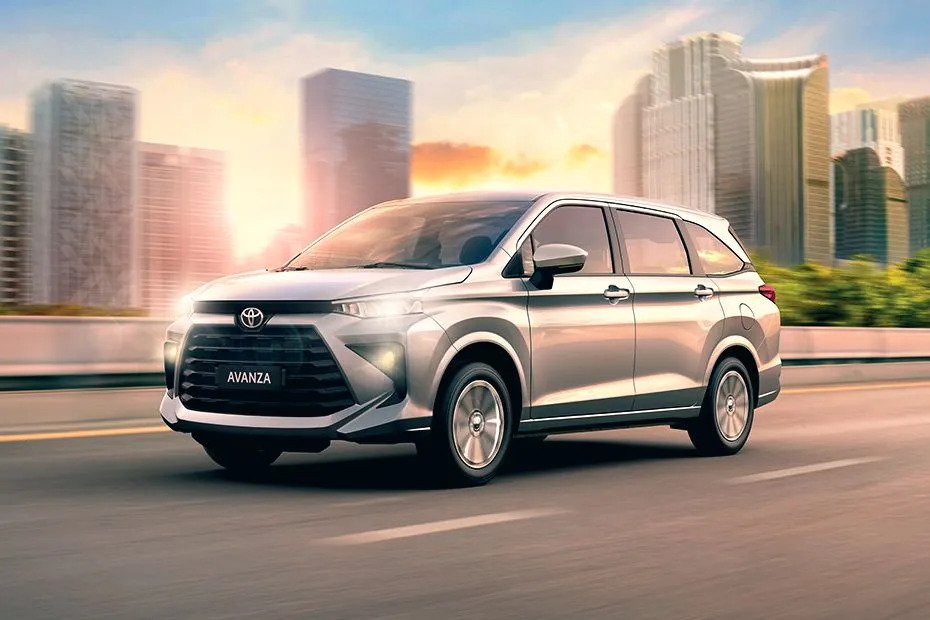
This is a quick look at the Toyota Avanza 2026 from a family-use angle, with the focus on cabin flexibility, entry price, and the everyday running costs that matter more in real life. For many families, a car like this is not bought because it looks especially exciting. It is bought because they want something that is less likely to become troublesome after the purchase. From that point of view, the Avanza still feels like a very typical and very realistic choice.
Key takeaways
The Toyota Avanza 2026 still deserves attention from buyers with a practical budget who also want one car to cover family trips and everyday transport.
Its value is not only about a relatively friendly entry price, but also about flexible space, an easy-going feel in daily driving, and maintenance expectations that are usually easier to plan for.
For most family-car buyers, the things worth checking are rarely a single number on a spec sheet. What matters more is whether the cabin is easy to use, whether the car is manageable in the city, and whether long-term ownership costs stay within a comfortable range.
Why the Avanza still feels like a safe bet to many families
In the family MPV market, the Avanza has never really been the kind of model that wins because it creates the biggest buzz. Many people consider it, honestly speaking, not because it is the flashiest option, but because it tends to be steady, sensible, and easy to live with in many important areas. For first-time family-car buyers, that feeling of “no obvious weak point” is often more valuable than a longer equipment list on paper.
One very practical reason it keeps showing up on shortlists is that it brings together several things families actually care about: everyday driving that does not feel troublesome, cabin space with some flexibility, and service and maintenance expectations that are usually easier to estimate. On top of that, the Toyota name itself still carries an image of durability and decent resale expectations for many people. That is why the Avanza keeps finding its way onto the shortlist.
It may not stand out the most, but it tends to feel steadier over the long run
A lot of family cars look perfectly fine in the first month or two, and only after six months or a year do the awkward little details start to show up. The Avanza approach is almost the opposite of chasing a strong first impression. It tries to make sure you run into fewer annoying details once the car becomes part of everyday life.
That is also why it is often seen as a conservative family car, but also a dependable one. For buyers with a clear budget and little interest in drama, that kind of direction can be very appealing. Buying a car is not just a one-time emotional purchase. After that come parking, maintenance, day-to-day costs, and the comfort of the people riding with you. Those things are what really decide whether the choice still feels right later.
The point of the three-row layout is usability, not just the fact that it can seat more people
Another core part of the Avanza story is its three-row layout. For many small to medium-sized families, three rows do not mean the car will be full every day, but that extra row does create more flexibility. School runs, weekend drives with older family members, or occasional extra passengers are all common situations.
From the dimensions, the Avanza is about 4,395 mm long, around 1,730 mm wide, and roughly 2,750 mm in wheelbase. Those numbers do not make it feel oversized, and that is exactly why it tends to be easier to live with in the city. It makes more sense to think of the Avanza as a family car built around being usable and easy to handle, rather than something that tries to look impressive just by being large.
In terms of seating layout, the Avanza usually uses a 2+3+2 seven-seat configuration. The second row slides and reclines, while the third row uses a 50:50 split-fold design. When extra passengers need to come along, the third row can be put back up. When larger cargo matters more, the rear rows can be folded to create a relatively flat luggage area. That kind of flexibility is exactly what many families are actually paying attention to.
For family buyers, whether the space is good or not is not just about how many people a brochure says the car can carry. What matters more is whether the second row is easy to get into, whether the third row is still tolerable for occasional passengers, and whether the folded layout really works when you need to load things. That is exactly the kind of down-to-earth area where the Avanza makes sense.
Why the entry price and everyday costs are also a big part of the appeal
When people shop for a family car, many start by staring at the sticker price. But what really decides whether the pressure feels manageable later is usually total ownership cost. One reason the Avanza keeps drawing interest is that not only is its purchase price relatively controllable, but the spending pattern afterward is also usually easier to estimate.
Based on current reference information, the Avanza 2026 starts at roughly Rp244 million in Indonesia, which comes out to around RMB 100,000 to 110,000 as a rough conversion. The final transaction price can still vary depending on trim, city, and dealer offers. In other words, the list price is useful as a starting point, but once you are seriously preparing to buy, it is still better to compare two or three offers instead of deciding from one quote alone.
The body is not large, and that usually makes daily commuting easier
A lot of families end up choosing the Avanza not because the numbers look dramatic, but because it is easier to live with in everyday city use. Its width is around 1,730 mm, which helps on narrow parking spots, neighborhood roads, and older parts of the city where space is tighter. For people who often drive alone to work or pick up children along the way, the advantage of a car that feels a bit smaller usually becomes obvious quite quickly.
Its ground clearance is about 195 mm. That kind of height usually gives a bit more confidence over ordinary speed bumps, rougher road entrances, or parking areas with more uneven surfaces, without becoming so tall that getting in and out feels awkward. For a family car, that balance matters a lot.
Do not overlook smaller details like the fuel tank and the rhythm of running costs
Another detail that is easy to ignore is the 43 L fuel tank. On paper that number is not especially dramatic, but for family users it matters because refueling intervals are usually still easy to manage. When the car is doing weekday commuting and short weekend trips at the same time, you are less likely to feel that you are always thinking about the next fuel stop.
Besides that, with a mainstream family-focused model like the Avanza, people also tend to care about service convenience, parts availability, and how predictable repair costs will be later. Very often, whether a car suits a family is not decided on the day it is bought, but by the pressure that comes with each maintenance visit, each replacement part, and every routine cost that shows up afterward.
One part of the Avanza's reputation in Indonesia is that spare parts are widely available and the service network is broad. For long-term ownership, that is a very practical advantage. Of course, actual maintenance costs can still differ by region and dealer, so it is a good idea to ask for a service-price list before buying as a basic point of reference.
Before seeing the car or taking a test drive, it helps to sort out a few things first
For a car like the Avanza, it is better not to show up only asking whether it is “worth it.” The more important question is whether the way this car works actually matches your family's lifestyle. A lot of people only realize later that what they got wrong was not the brand, but the usage scenario.
Family buyers usually pay close attention to points such as:
Whether second-row comfort is acceptable for family members
Whether the third row is only good for emergencies or can handle more frequent use
Whether the body size still feels manageable in city traffic
Whether the cargo area remains useful both with a full load and without one
Whether the rhythm of running costs and upkeep matches the household budget
From this stage onward, it makes more sense to look at the Avanza as a full family-use solution rather than as a price list. In many cases, satisfaction is not decided by the most eye-catching selling point, but by the little details you have to deal with every day.
A short checklist before buying
Before a test drive or before getting serious about placing an order, there are a few things you should really confirm for yourself. It is worth taking this part seriously, because quite a lot of post-purchase regret actually comes from small details that were skipped too quickly at the beginning.
Try both the second and third rows in person
One of the most common mistakes with three-row family cars is sitting only in the driver's seat. Many people focus on the steering wheel and dashboard during the test drive, and only after buying the car realize that the family members who ride in the back most often are the ones who feel uncomfortable. That is why it is best to sit in both the second and third rows yourself.
The point is not only whether you can physically fit, but whether your legs feel cramped, whether getting in and out feels easy, and whether headroom feels too tight. If your family really does travel with more than five people fairly often, this step matters even more. In its class, the Avanza's third row is usable, but not truly spacious. Adults can manage it on short trips, but on longer drives it still makes more sense to put children or smaller passengers in the back.
On the test drive, do not stick only to smooth roads; try to simulate real commuting
If possible, do not end the test drive after one easy loop on a smooth road. Try to find situations that feel closer to real everyday use, such as slow traffic, U-turns on narrower roads, reversing into a parking spot, or slightly uneven surfaces. That is usually when it becomes much clearer whether the car is genuinely easy to use or only seems fine at first glance.
For a family MPV like this, many strengths and weaknesses only show themselves at low speed and on rougher road surfaces. Whether the steering is light enough, whether the front and rear corners are easy to judge, and whether the rear passengers feel too much extra movement all matter more than a simple straight-line pull. It is also worth paying attention to how the power feels with a full load, because a family car can feel quite different when fully occupied compared with when it is empty.
Do not look only at the purchase price; also add up 12 to 24 months of costs
For families with a tighter budget, a more detailed cost calculation is usually the safer way to think. Besides the car price, it also helps to look at insurance, routine servicing, tires, fuel use, and the small repair costs that may appear later. What wears people down with a family car is often not one huge bill, but smaller bills that keep turning up.
If peace of mind is already one of your top priorities, this is exactly where a car like the Avanza tends to make sense. It may not be the most exciting thing in the showroom, but it has a better chance of making the years after purchase feel less disruptive.
Who should consider the Toyota Avanza 2026?
The Avanza 2026 suits several kinds of buyers. First, people buying their first family car who want controlled spending, broad usability, and something that is not hard to live with. Second, families with a fair number of members who still do not want to move to a larger vehicle. Third, buyers who care more about stability, service convenience, and ownership pressure that stays manageable over time.
If your main use is city commuting, picking up family members, and the occasional short weekend trip, the Avanza's overall direction fits that life quite well. It may not be the most attention-grabbing model in its class, but it could easily be one of the least disruptive to your day-to-day routine after you buy it.
FAQ
Is the Toyota Avanza 2026 suitable as a first family car?
For many families, yes. It especially suits buyers who are watching their budget carefully but still want room for more people without making daily use feel heavy. The Avanza's strength is not one exaggerated headline number. It is the relatively low-friction way the whole package works.
What should I prioritize most before buying?
The main things worth confirming first are the real comfort of the second and third rows, how much pressure the car puts on you in city driving, and whether one to two years of running costs still fit your budget.
Is the Avanza better for city use or for family trips?
For many users, its value is that it can do both. It does not feel too tiring in the city, and when the weekend comes and the family needs to head out, the space and practicality are still ready to do their job.