
Indonesia Electric Motorcycle Subsidy News: Sales Slump as Buyers Keep Waiting
Jakarta — September 2026 has not been easy for electric-motorcycle dealers in Indonesia.
Date: 2026-10-08Author: otochannel Editorial
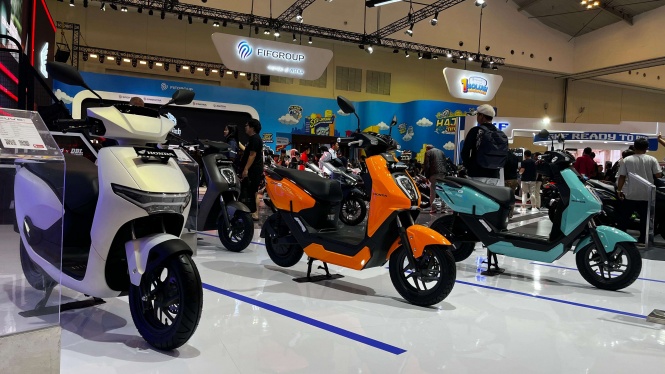
Jakarta — September 2026 has not been easy for electric-motorcycle dealers in Indonesia.
At a hearing with Commission VII of the House of Representatives on September 21, Budi Setiyadi, chairman of the Indonesian Electric Motorcycle Industry Association (Aismoli), pointed to one number that pretty much explained the mood in the market: as of August, national electric-motorcycle sales were only 18,900 units. Put that next to the 77,000 units recorded in 2024, and the drop is not a small dip anymore. It looks more like the floor gave way.
Budi called it a “very significant” decline. And the awkward part is, the problem is not mainly the product. The real issue is that buyers are still waiting for one thing: the subsidy.
A subsidy that keeps sounding close, but still has not landed
Since the start of 2026, the Indonesian government has repeatedly signaled that an electric-motorcycle subsidy would return. Finance Minister Purbaya Yudhi Sadewa mentioned the plan in multiple settings. Early expectations pointed to a launch in May or June, with Rp5 million per unit. After that, the numbers started drifting in media coverage. Some reports mentioned Rp5 million, some Rp3 million, and some suggested the old Rp7 million standard might continue in one form or another.
By September, though, the money still had not actually reached consumers.
Industry Minister Agus Gumiwang Kartasasmita told reporters on September 23 that the technical details were ready and that the government was now waiting for the Finance Ministry’s PMK regulation to be issued. In plain language, the policy frame is there, but the key has not gone into the lock yet.
That uncertainty has gone straight into the market. Budi put it bluntly: the public is waiting, waiting to see when the subsidy becomes real rather than just another near-term promise.
From 77,000 to 18,900: why the sales curve suddenly turned ugly
If you stretch the timeline out a little, the pattern becomes hard to miss.
In 2023, Indonesia sold around 15,000 electric motorcycles. In 2024, once subsidies were in place, sales jumped to 77,000 units. In 2025, the subsidy was paused, yet sales still held around 70,000. That suggested the market had already built some momentum and that public acceptance was moving in the right direction.
Then came 2026. News that a new subsidy was “coming soon” rolled through the market again and again, and sales instead fell to just 18,900 units.
Budi’s explanation is fairly straightforward and, honestly, hard to argue with. When buyers think a subsidy may arrive soon, the rational move is to wait. If waiting a bit longer might save several million rupiah, plenty of people will sit on their hands.
The trouble is that what feels rational for buyers becomes very real pressure for dealers and manufacturers. Inventory sits longer, warehouse pressure builds, cash flow tightens, and the policy timeline remains fuzzy.
How the subsidy may work, and where buyers can still get stuck
If the subsidy finally goes live, the issue for consumers is not only how much money they can save.
The first question is eligibility. Under the policy direction discussed so far, applicants would need an Indonesian electronic ID card, be at least 17 years old, and use one national identity number, or NIK, for only one subsidized electric motorcycle. Earlier, when subsidy values were higher, screening tended to be tighter, including checks related to prosperity-family status or MSME ties. The later direction appeared more relaxed, leaning toward a simpler “have a valid KTP” approach.
Eligibility is only the first gate
Even if the rules are loosened, buyers still have to pass the paperwork gate first. That sounds obvious, but this is exactly where many purchases start going sideways. Plenty of consumers assume that because a policy exists, they automatically qualify. In reality, the process still depends on verified identity, administrative checks, and the timing of whatever final rule is issued.
Not every electric motorcycle will qualify
The second issue is the model itself. Not every electric motorcycle can be subsidized. The government requires a domestic-content level, or TKDN, of at least 40 percent. That means brands or variants relying heavily on imported components may look attractive on price or design but still fall outside the subsidy list.
For buyers, that is where expectations can get messy. A person may already have a preferred model in mind, only to find that the version they want is not eligible when the final list comes out.
Dealer participation still matters
The third issue is the dealership channel. Consumers do not simply claim the subsidy on their own and sort it out later. Verification and purchase procedures must go through authorized dealers participating in the program. So even if a buyer qualifies and the target model is included, the purchase can still stall if there is no participating dealer nearby or if the local process is not running smoothly.
That is why this story is not just about subsidy size. It is also about execution on the ground.
The money saved upfront may not be the whole story
A common mistake among buyers is to treat the post-subsidy price as the final answer. It is not.
The real ownership cost of an electric motorcycle still needs to be looked at as a package. Electricity is indeed cheaper than gasoline. Based on relevant research figures, the electricity cost per kilometer for an electric motorcycle is around Rp74, while a gasoline motorcycle can run closer to Rp236 per kilometer in fuel cost. At an annual distance of roughly 14,000 kilometers, the yearly energy-cost gap can exceed Rp2 million.
That said, electric motorcycles also bring cost questions that gasoline bikes do not carry in quite the same way.
Charging and battery questions do not disappear after purchase
The battery is still the biggest variable. Many brands now offer fairly long battery warranties, which helps calm some nerves. Even so, the replacement cost after the warranty period remains a figure buyers should understand before signing anything.
Charging access matters too. If a rider has a stable charging point at home or at work, the ownership math may look much better. If not, and the rider has to rely on public charging, then both time cost and charging cost can change the calculation.
Maintenance may be lighter, but it is not zero
On maintenance and insurance, electric motorcycles do avoid routine items such as engine oil and oil-filter service. But brake components, tires, suspension, and other wear items still need attention. In broad terms, electric motorcycles are usually cheaper and simpler to maintain than gasoline motorcycles, but “lower maintenance” should not be mistaken for “no maintenance.”
Subsidies may help, but they do not fix the infrastructure gap
At the same hearing, Aismoli also raised several issues that subsidies alone cannot solve: too few charging stations, repair networks that are still not dense enough, and bank financing that remains cautious toward electric motorcycles.
Budi said the industry had already discussed financing with the government and with Himbara, the association of Indonesia’s state-owned banks. According to him, the banks said they were ready, but practical barriers were still showing up in the field.
That means even if the subsidy is finally activated, some buyers may still be left outside the door. A rider living in an area with weak charging infrastructure, or one whose income profile struggles to pass lending checks, may still find the switch difficult.
Indonesia’s target is to put 13 million electric motorcycles on the road by 2030. As of 2026, cumulative sales are around 280,000 units. That gap is still enormous.
So, is this the right time to buy, or not yet?
That brings the story back to the question consumers actually care about: if the subsidy does arrive, is this finally the right moment to buy?
If the subsidy lands at Rp5 million, then for an electric motorcycle priced in the Rp20 million to Rp30 million range, the discount is meaningful. It is roughly the difference between a purchase that still feels heavy and one that suddenly looks a lot more reachable. If the final amount lands closer to Rp3 million, the appeal is still there, just less dramatic.
Still, timing is not only a price question. If a buyer has a fixed daily commute, easy charging access at home or work, and a plan to keep the motorcycle for the longer term, then the subsidy can clearly improve the equation. But if someone is mostly being pulled in by the word “subsidy” and has not really thought through charging, service access, or battery-life concerns, the money saved upfront may quietly come back out later in other forms.
Indonesia’s electric-motorcycle market is in an awkward phase: the policy direction is clear, but the execution pace is still blurry. For consumers, the most rational move may be neither rushing to place an order nor waiting forever. It may simply be to sort out their real usage pattern and cost structure first. The subsidy helps, sure, but it is not the whole decision.
FAQ
Why did electric-motorcycle sales in Indonesia fall so sharply in 2026?
One major reason is that many buyers chose to wait after repeated signals that a new subsidy was coming soon, which froze purchase decisions across the market.
What should buyers check before assuming they can get the subsidy?
They should first confirm eligibility rules, whether the target model meets the required TKDN threshold, and whether a participating authorized dealer is available in their area.
Does a lower subsidized price automatically mean the bike will be cheap to own?
Not necessarily. Buyers still need to look at charging access, battery-related risk, insurance, maintenance, and any financing burden instead of focusing only on the upfront discount.